
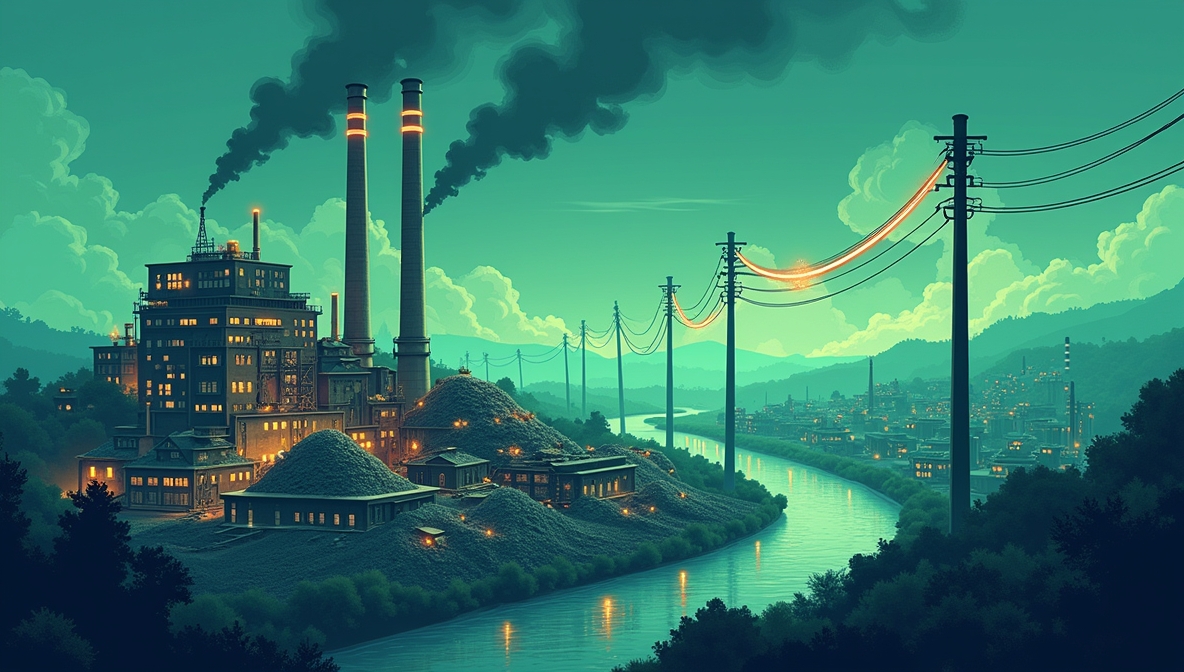


Imagine a world where your garbage doesn’t just pile up in landfills but instead powers your home, charges your phone, and even fuels public transportation. Sounds like science fiction? It’s not—thanks to waste-to-energy (WTE) plants, this is already happening in cities worldwide.
With landfills overflowing and climate change accelerating, we need smarter ways to handle waste. WTE plants offer a double win: they reduce landfill waste and generate clean energy. But how exactly do they work? Are they truly sustainable? And could this be the future of renewable energy?
In this post, we’ll break down the science behind WTE plants, explore their pros and cons, and discuss how you can support a waste-free future.
What Are Waste-to-Energy Plants?
Waste-to-energy plants are advanced facilities that convert non-recyclable waste into electricity, heat, or fuel. Instead of burying trash in landfills (where it emits methane—a potent greenhouse gas), WTE plants burn waste at high temperatures, using the heat to produce steam that drives turbines, generating power.
How It Works (In Simple Terms)
-
Waste Collection – Non-recyclable trash is delivered to the facility.
-
Combustion – The waste is burned at 1,800°F+, reducing it to ash.
-
Energy Recovery – Heat from burning creates steam, which spins turbines to generate electricity.
-
Emission Control – Advanced filters capture pollutants, making the process cleaner than traditional incineration.
Fun Fact: One ton of waste can produce 500–600 kWh of electricity—enough to power a home for two weeks!
The Pros and Cons of Waste-to-Energy
✅ The Benefits
✔ Reduces Landfill Waste – WTE plants can divert up to 90% of trash from landfills.
✔ Generates Renewable Energy – Unlike fossil fuels, trash is a “renewable” resource (we’re not running out of it anytime soon).
✔ Lowers Methane Emissions – Landfills produce methane (25x worse than CO₂ for climate change); WTE cuts this drastically.
✔ Metal Recovery – Post-combustion, metals like aluminum and steel can be recycled from the ash.
❌ The Challenges
✖ Air Pollution Concerns – While modern filters remove most toxins, some emissions (like CO₂) remain.
✖ High Initial Costs – Building a WTE plant requires billions in investment.
✖ Competes with Recycling – If not managed well, WTE could discourage recycling efforts.
Bottom Line: WTE isn’t perfect, but when combined with recycling and composting, it’s a powerful tool for sustainable waste management.
5 Innovative Waste-to-Energy Technologies
1. Incineration with Energy Recovery (Most Common)
-
How it works: Burns waste to produce steam for electricity.
-
Example: Copenhagen’s Amager Bakke plant doubles as a ski slope!
2. Gasification (Turning Waste into Synthetic Gas)
-
How it works: Heats waste with limited oxygen, creating “syngas” for fuel.
-
Example: Enerkem in Canada converts trash into biofuels.
3. Plasma Arc Gasification (Super-Heated Waste Breakdown)
-
How it works: Uses plasma torches (10,000°F!) to vaporize trash into clean gas.
-
Example: Japan’s Mihama-Mikata Plant processes hazardous waste safely.
4. Anaerobic Digestion (For Organic Waste)
-
How it works: Microorganisms break down food waste into biogas (methane for energy).
-
Example: San Francisco’s Zero Waste Program powers buses with food scraps.
5. Pyrolysis (Waste-to-Oil Conversion)
-
How it works: Heats plastic waste without oxygen, creating diesel-like fuel.
-
Example: Brightmark’s Indiana plant turns plastic into clean energy.
How You Can Support Waste-to-Energy Efforts
Even if you don’t live near a WTE plant, you can help:
✅ Reduce & Recycle First – WTE should be for non-recyclable waste only.
✅ Compost Food Scraps – Organic waste is better used in anaerobic digesters than burned.
✅ Advocate for Clean WTE Policies – Support local initiatives for modern, low-emission plants.
✅ Educate Others – Many fear “incinerators,” but today’s WTE tech is far cleaner.
FAQs About Waste-to-Energy Plants
1. Is burning trash really “green”?
Compared to landfills (methane) and coal plants (CO₂), modern WTE is cleaner—but recycling is still better.
2. Do WTE plants smell bad?
No! Advanced plants scrub emissions and operate in closed systems (unlike old incinerators).
3. Can all waste be burned?
No—batteries, hazardous materials, and recyclables should never go to WTE plants.
4. Which countries use WTE the most?
Sweden (99% waste recycled or WTE), Japan, and Denmark lead the way.
5. Will WTE replace recycling?
No—the best systems prioritize recycling first, using WTE only for leftovers.
Conclusion
Waste-to-energy isn’t a magic fix, but it’s a critical piece of the zero-waste puzzle. By turning trash into power, we can:
✔ Slash landfill use
✔ Fight climate change
✔ Create renewable energy from an endless resource (our garbage!)
The key? Using WTE responsibly—alongside recycling, composting, and waste reduction.
Your Turn!
What’s your take on waste-to-energy? Would you support a plant in your city? Share your thoughts below—let’s discuss! ♻️⚡